
by John Davey
(as ‘Future Shocks’)
from Tripwire No. 63, ed. Joel Meadows, January 2025
(contains some illustrations not included in that volume)
THE HISTORY OF New Worlds magazine is a long and varied one.
It started life in March 1936 as Novae Terra (Latin for ‘New Worlds’) and was the U.K.’s first ever fanzine, initially published in Nuneaton by Chapter 22 of the Science Fiction League. It was edited by Maurice K. Hanson, ably assisted at different times by Dennis A. Jacques, Edward J. Carnell, Arthur C. Clarke, William F. Temple and others (all with a penchant for middle initials). It ran for twenty-nine issues, finishing in January 1939 by which time it had moved to London and become the official organ of the newly formed (national) Science Fiction Association.

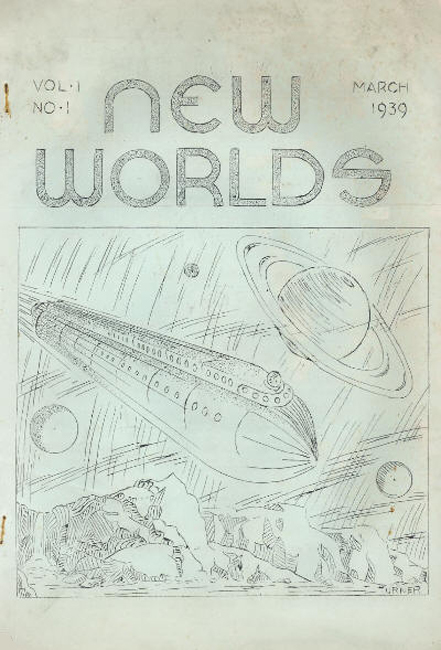
From March to August 1939, four more fanzines appeared, this time as New Worlds (q.v.) edited by Ted (previously Edward J.) Carnell. The new run was then curtailed by the outbreak of the Second World War and ensuing paper shortages, unsurprisingly forcing the title to undergo its first but by no means last publishing hiatus.
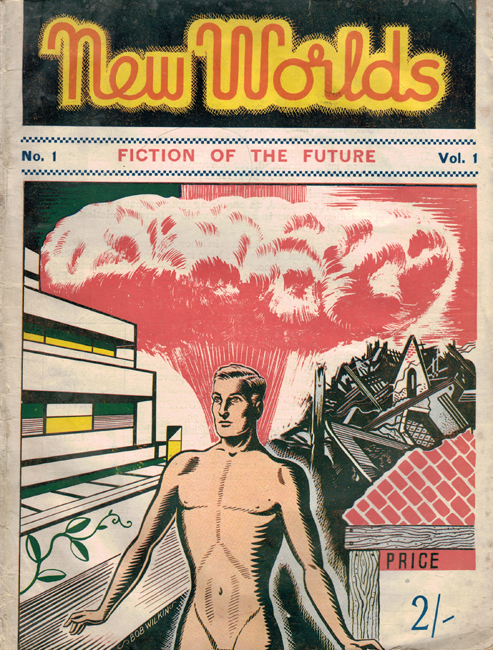
Following the end of the war, the first professionally published issue of New Worlds — Volume 1 Number 1 — appeared as a pulp-format magazine in July 1946. Its decidedly atypical cover was by R.A. Wilkin, but this was later supplanted with an image by Victor Caesari of more traditional spaceships and such when republished due to poor sales of the original issue No. 1 and good sales of issue No. 2 (which also sported Caesari’s cover). A third issue followed a whole year later, before the magazines’ publisher, Pendulum Publications, collapsed.

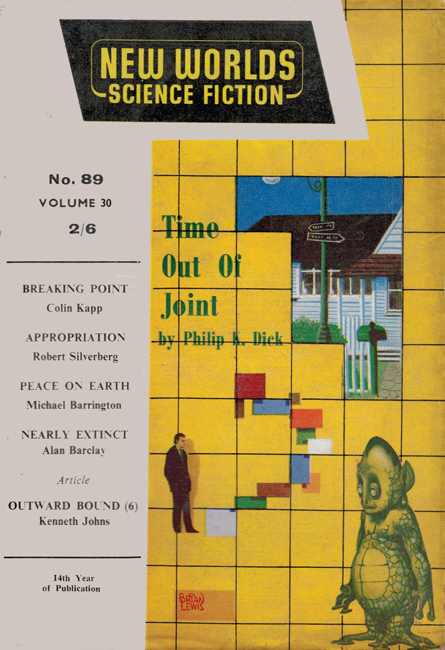
It was not until March 1949 that Vol. 2 No. 4 appeared in digest format from Nova Publications, a fan consortium under the aegis of editor (now John) Carnell; and thus it remained for the next one hundred and thirty-seven issues, during which time the first SF stories appeared from E.C. Tubb, J.G. Ballard, Michael Moorcock (with Barrington J. Bayley), Hilary Bailey and others, as well as early work from the likes of Brian W. Aldiss, John Brunner, Kenneth Bulmer, Colin Kapp, James White and many more.

In the winter of 1951/’52, Carnell added to Nova’s stable by taking over Science Fantasy magazine from Walter Gillings after just two issues, and also producing from March 1958 a British edition of the American digest Science Fiction Adventures (ed. Larry T. Shaw). Science Fantasy published stories by many New Worlds writers, including the first nine of Michael Moorcock’s novellas to feature Elric of Melniboné (the last four serialising the novel Stormbringer), and much of the early work of Thomas Burnett Swann, while Science Fiction Adventures began life mostly comprised of stories reprinted from the American edition before going on to publish its own original material; to quote Moorcock: “somewhat at odds with its title, [S.F.A.] published some of the most thoughtful British SF”.


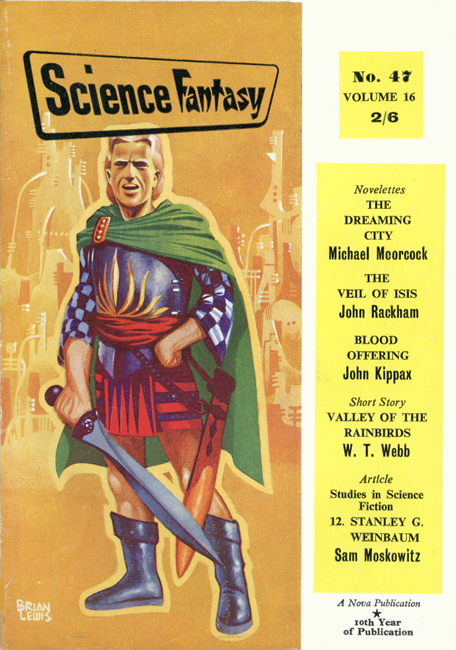
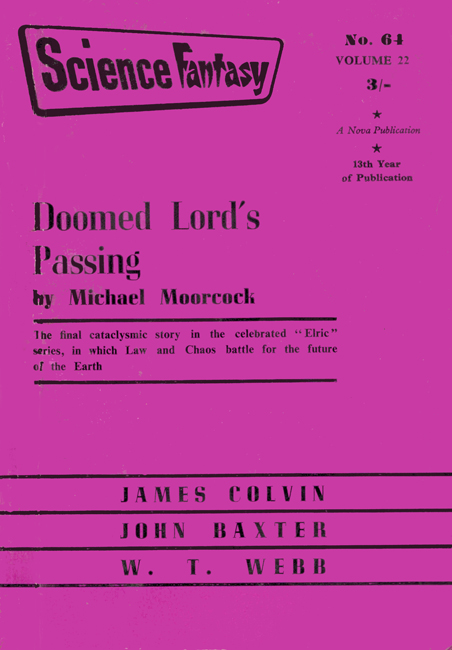
The first few years of the 1960s saw a sharp decline in the sales of genre magazines, and the three Nova titles were no exceptions. Science Fiction Adventures folded with its thirty-second (and final) issue in May 1963. The last issues of New Worlds and Science Fantasy under Carnell both appeared in April 1964, the latter almost entirely dominated by Moorcock with ‘Doomed Lord’s Passing’ (final part of Stormbringer), the novella ‘The Deep Fix’ (as by “James Colvin”) and the conclusion of his four-part essay ‘Aspects of Fantasy’.

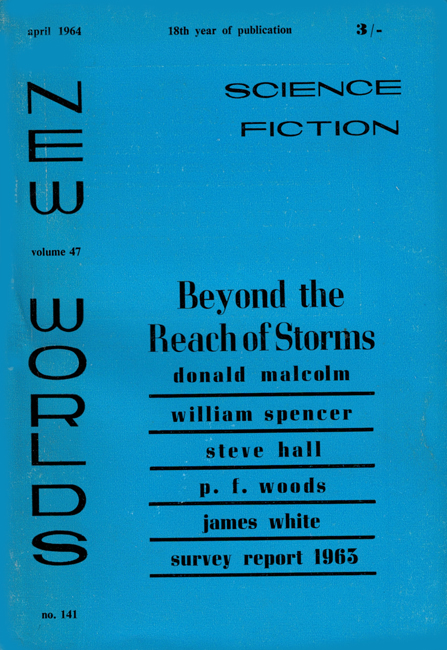
So it surprised many readers when Carnell announced in his ‘Farewell Editorial’ (N.W. Vol. 47 No. 141) that he could “officially state that Michael Moorcock will be editing New Worlds Science Fiction (probably as a bi-monthly at first) and that I think he will make a very capable editor indeed, having had four years’ editorial experience with Fleetway Publications and been steeped in the lore of SF for many more. Despite his success as a fantasy writer, he is unlikely to allow this to influence his judgment on science fiction stories. Science Fantasy will be edited by Kyril Bonfiglioli, unknown to the majority of SF readers but a man with a vast background of SF knowledge”.
Moorcock had in fact written a guest editorial for an earlier N.W. issue (No. 129, April 1963). Titled ‘Play with Feeling’, in it he demanded of contributors “more social and political engagement, better writing, better characterisation, more experimental prose, more urgent subject matter”.

So it was that, onward from the publication of New Worlds Vol. 48 No. 142, dated May/June 1964, Michael Moorcock began single-handedly to transform the magazine, and the genre itself, into a controversial medium for challenging and experimental speculative fiction by writers such as Aldiss, Ballard, Michael Butterworth, Samuel R. Delany, Thomas M. Disch, Harlan Ellison, Thomas Pynchon, John Sladek, Norman Spinrad, Emma Tennant, D.M. Thomas, Pamela Zoline and others. Moorcock’s magazine was crucial in the development of the so-called SF New Wave, whilst championing authors as disparate as William S. Burroughs and Mervyn Peake.


His first editorial (as editor) — titled ‘A New Literature for the Space Age’ — set the tone by suggesting that Burroughs was “the first SF writer to explore all the form’s potentialities and develop a new mythology”. Ballard also wrote about Burroughs in the same issue (‘Myth-Maker of the 20th Century’) as well as providing the first of a two-part story, ‘Equinox’, which would go on to become the acclaimed novel The Crystal World. Other fiction was by Aldiss, Bayley and Brunner, and the issue featured its first cover by James Cawthorn.
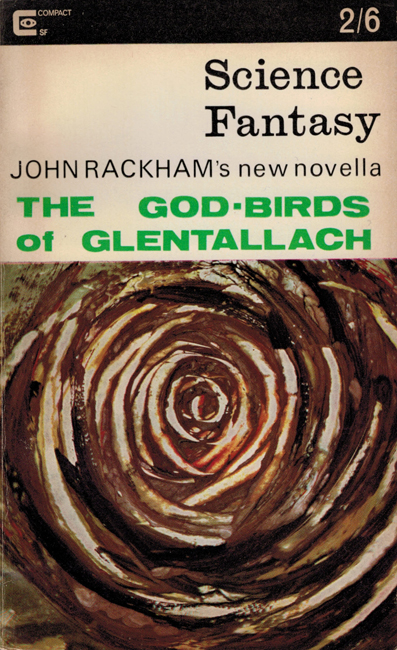

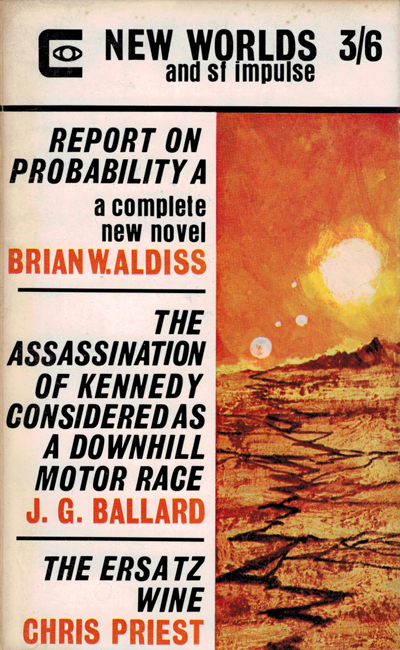
With the new editor came a new publisher, Roberts & Vintner, and a new mass-sized paperback format. The same was the case with Science Fantasy, which had ended with Carnell at the helm with Vol. 22 No. 64. It then ran under Bonfiglioli’s editorship until Vol. 24 No. 81 (February 1966), after which it was renamed Impulse (later SF impulse) for another twelve issues, the last five edited by Harry Harrison with Keith Roberts. Impulse, to all intents and purposes, ended there in February 1967, although the next two issues of New Worlds (by then a monthly) bore the short-lived cover title of New Worlds and SF Impulse.

But further change was afoot.
New Worlds Vol. 51 No. 173 appeared in July 1967, and ushered in the title’s most ambitious and controversial phase as a large-format magazine which would last for the next four years under a variety of publishers, including Moorcock himself from the start of 1969.

That first magazine issue began a four-part serialisation of Disch’s new novel Camp Concentration. Other fiction was by Ballard, Sladek, David Masson and Roger Zelazny, as well as introducing Pamela Zoline’s first ever story, ‘The Heat Death of the Universe’. The cover was by M.C. Escher whose work was examined within by Charles Platt, alongside other non-fiction by Dr. Christopher Evans and reviews by Aldiss.
But it was the serialisation of another new novel that landed New Worlds in some serious hot water, perhaps best described (in amalgam) by Moorcock himself…
“When we published Norman Spinrad’s Bug Jack Barron as a serial, together with Langdon Jones’s story sequence The Eye of the Lens, we ran into attempted censorship from W.H. Smith’s [at the time, along with John Menzie’s, monopolising British print distribution] who demanded we drop such stories if they were to continue distributing us. There was an outcry in the Press. Parliament became briefly involved. A Tory asked a Question about us in the House of Commons — why was public money (after Brian Aldiss persuaded the Arts Council to give us a small grant) being spent on such filth? — Smith’s pretended to take us back, but the distribution never really happened.”
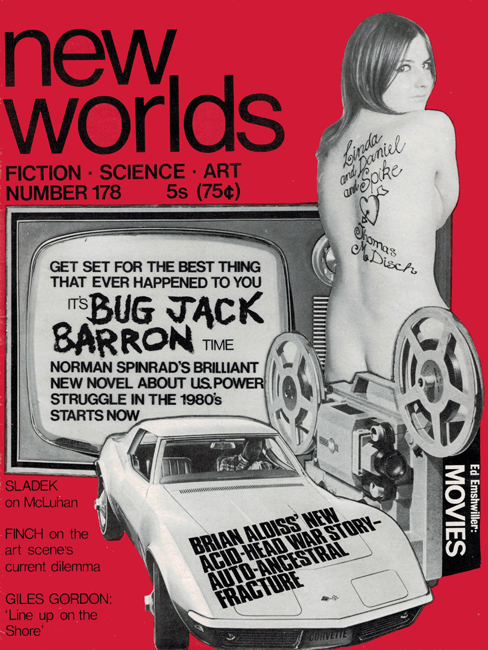
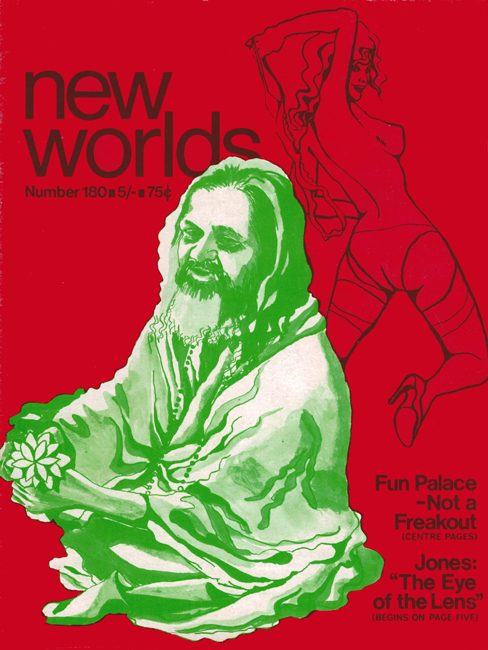
Bug Jack Barron ran in issues 178–181, with No. 180 (March 1968) being the “largely undistributed ‘banned’ issue”, No. 184 a “Special All New Writers Issue” including first stories by Graham Charnock, M. John Harrison and Robert Holdstock, and No. 185 becoming “largely pulped by distributors”.

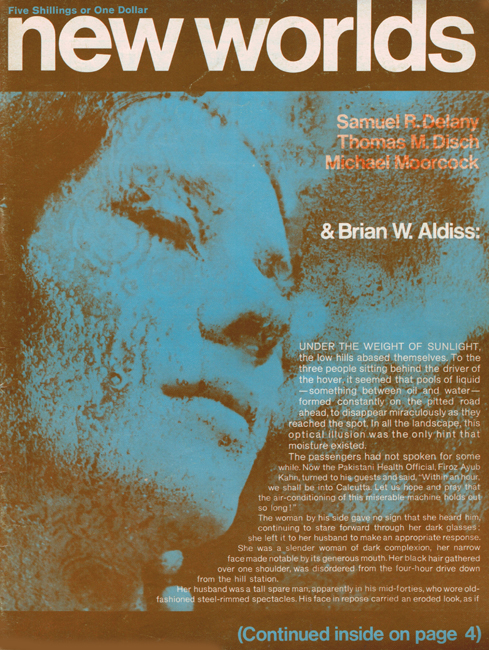
But there were some more positive developments; to quote Moorcock again: “That issue [No. 185, December 1968] also ran my second Jerry Cornelius short (the first to be published) ‘The Delhi Division’. The Cornelius stories caught the imagination of Jim Sallis, then an editor on New Worlds, and various other writers, who spontaneously began to write stories around the Cornelius themes or the character of Cornelius. The Cornelius stories were a form in themselves, and this, I think, is what attracted so many writers of such various talents as Sallis, Spinrad, Aldiss, Harrison and a good many others. Langdon Jones wrote a narrative poem with Cornelius as the central character.” Many of these were illustrated quintessentially by either Mal Dean or Richard Glyn Jones.


During this time, Moorcock would sometimes share editorial duties with (in various combinations) Sallis, Platt and Langdon Jones, before turning over the editorship almost entirely to Platt from No. 197 in January 1970.

But the magazine’s chaotically creative heyday was nearing its end.

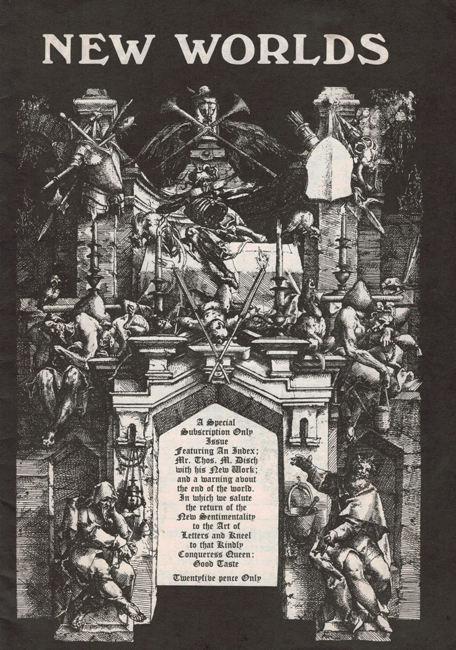
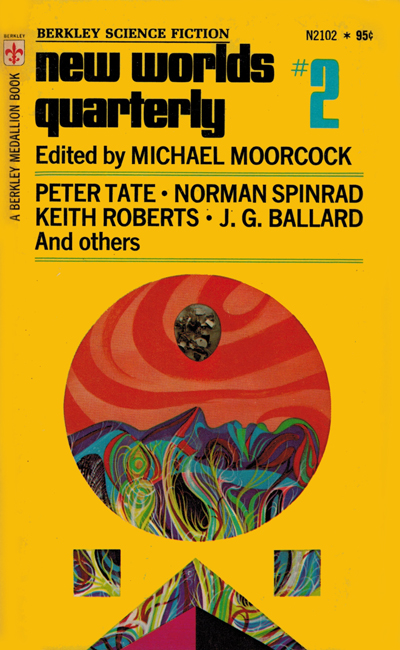
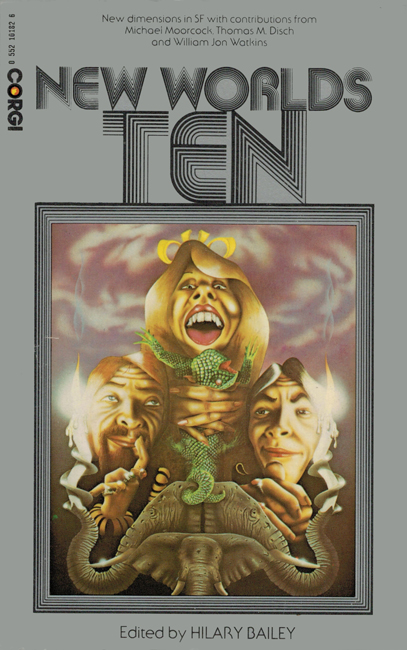
New Worlds No. 200 appeared in April 1970, and was the last monthly issue on general sale. It was followed almost a year later by No. 201 (ed. Moorcock), a “Special Subscription Only Issue”, and this in turn was followed in June (or possibly September) 1971 by the first of ten New Worlds Quarterly paperback anthologies although that planned schedule soon slipped. They were published by Sphere and later Corgi, the first five edited by Moorcock, the sixth by Moorcock & Platt, the seventh by Hilary Bailey & Platt and the remainder by Bailey alone. The first two included both new and previously published material, and six of the first seven were also published in the U.S.A. by Berkley and later Avon. The only previous concerted attempt at Stateside publication had been a short-lived run of five issues (q.v.) edited by Hans Stefan Santesson in 1960, mostly comprised of stories reprinted from the Carnell-era British edition. The final ‘Quarterly’, New Worlds 10, was published in August 1976.


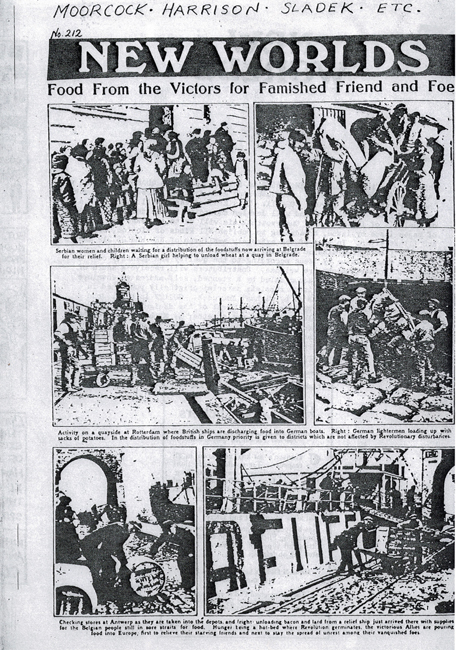
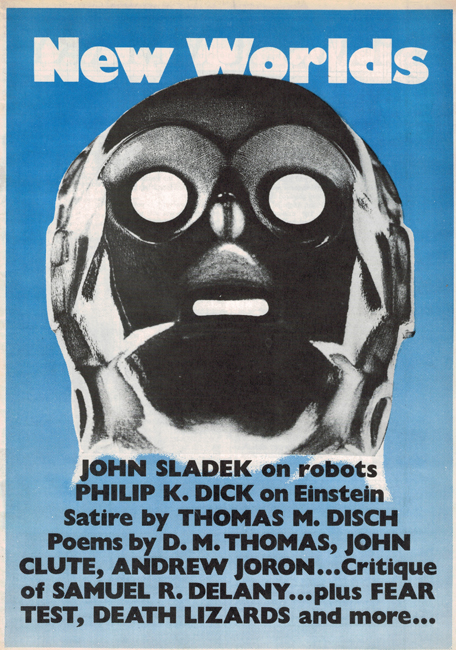
It was then nearly two years before the next and most ephemeral issue — Vol. 60 No. 212 — appeared as two folded sheets of A3 paper, photocopied reprints, mainly of material by N.W. regulars originally published in Frendz underground newspaper. It was edited by Moorcock, as were two further, more substantial magazine issues in 1978 which he described as “a new kind, [they] contained a great deal of primarily visual material and the contents a trifle difficult to list and to give credit, since much of it was the work of a group … Distribution was limited to specialist shops and mail order”. Issue No. 213, he said, “concentrated primarily on polemics, attacking what it regarded as moribund in the literary world of 1978”.

Another, similarly outré magazine appeared in the spring of 1979, edited and published by David Britton and Michael Butterworth of Savoy Books, Manchester, and this was followed by Vol. 61 No. 216, dated September 1979 (but possibly not surfacing until early the following year), described by its editor and publisher Charles Platt as a “Normal Issue” with “little or no material of significant peculiarity”.
It was then more than a decade before the title’s next appearance and next change of direction, with the first of four annual New Worlds anthologies published by Gollancz in September 1991 and edited by David Garnett. Whilst including such N.W. stalwarts as Aldiss, Bayley, Charnock and Moorcock, these volumes tended to focus on writers who had risen to prominence in the intervening years such as Storm Constantine, Paul Di Filippo, Paul J. McAuley, Kim Newman and Lisa Tuttle.

In November 1996, a magazine issue — Vol. 63 No. 221, edited by Moorcock and published by Jayde Design — celebrated the title’s fiftieth anniversary as a professionally published periodical, and included first-time New Worlds contributions from Peter Ackroyd, Andrea Dworkin and Iain Sinclair. This was followed a year later by another Garnett-edited anthology published in the U.S.A. by White Wolf.


Nobody, at that point, expected a whole quarter of a century to pass before a new New Worlds would see the light of day. But it was January 2022 before New Worlds (“Issue #1”), edited by Nick Gevers & Peter Crowther, was published by PS Publishing as a slip-cased limited-edition hardcover (signed by all living contributors) as well as a paperback.
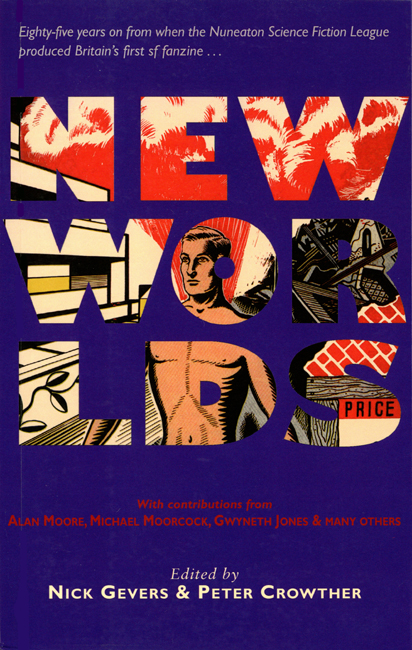
All of which brings us to now.
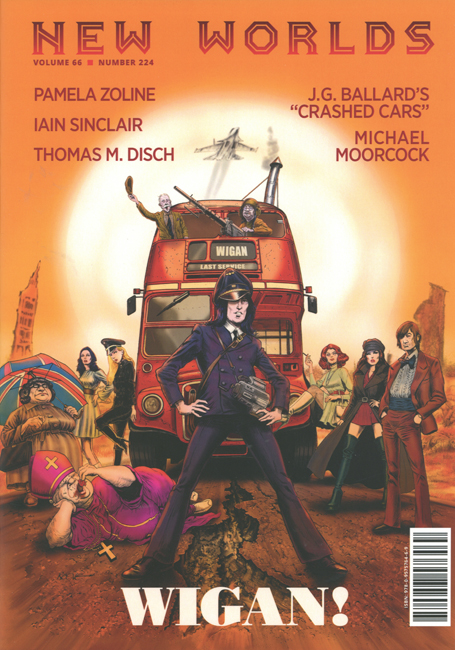
Published at the end of September 2024, New Worlds Vol. 66 No. 224 is another Moorcock/Jayde anniversary issue “which celebrates 60 years since Moorcock took over and 100 years since publication of [André Breton’s] Surrealist Manifesto”. Deliberately retrospective, commemorating the magazine’s heyday, it features posthumous stories by Disch and Sladek as well as fiction by Moorcock (a brand-new Cornelius tale), Sinclair and Zoline, artwork by Allan Kausch, Mark Reeve and others, poetry by Roz Kaveney and non-fiction from long-standing N.W. reviewer John Clute, designer John Coulthart, and Zoline reminiscing on times spent with J.G. Ballard.
In two years, as I write this, the history of New Worlds will have been ninety years in the making.
PS Publishing has promised a second “Issue” from them sometime in 2025.
After that, who knows?
There have already been many more editors, publishers, shapes, sizes and pauses than might ever have been expected.
But there still seems to be life in the old dog yet…
— John Davey,
London,
November 2024.
 Moorcography.org